Is there a link between food allergies and eczema?
Food allergies are a known comorbidity (or related health condition) of atopic dermatitis, the most common type of eczema. Food allergies, along with asthma and allergic rhinitis, are a common set of allergic conditions that often affect people with atopic dermatitis called the atopic march.2 The atopic march (asthma, allergic rhinitis and food allergies) typically comes on in a sequence one after another usually after being diagnosed with atopic dermatitis.2 In general, if you have one of these four conditions — atopic dermatitis, asthma, allergic rhinitis or food allergies — the likelihood of developing one of the other three allergic conditions increases.
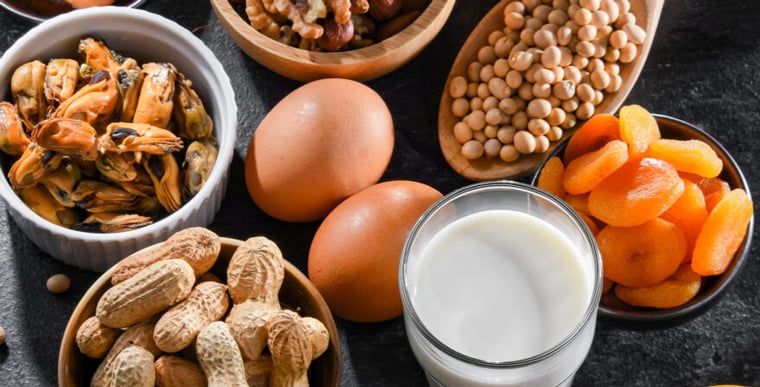
Children with atopic dermatitis are six times more likely to develop a food allergy than those without atopic dermatitis.3 There are a few food allergies that tend to be more common for those with atopic dermatitis. These include milk, eggs, fish, shellfish, tree nuts, peanuts, wheat and soybeans.4 Doctors do not recommend that you avoid these foods just because you have eczema. If there is a concern for a potential food allergy, you should consult with an allergist.
Symptoms of food allergies typically appear within 30 minutes of eating or breathing in a food allergen and can include:
- Itchy mouth and swelling of the lips
- Vomiting, diarrhea, painful stomach cramps
- Hives, rash or reddening of the skin
- Blood pressure drop
What’s the difference between food allergies and food sensitivities?
Knowing the difference between food allergies and food sensitivities or intolerances can help you understand the correlation between eczema and diet.
A food sensitivity, or food intolerance, happens when someone has difficulty digesting certain foods, which can lead to gas, bloating, abdominal pain or diarrhea. It can also trigger a rash, but this is a different reaction than atopic dermatitis.5 Food sensitivity can happen when the skin or gut comes into contact with a specific food.
A food allergy provokes an immune system reaction that affects several organs in the body, called an immunoglobulin E (IgE) reaction. It can lead to a variety of symptoms, and some are life-threatening. In most cases, food allergies spark an immediate reaction, within minutes of consuming the food. Common ones include hives, itchiness, swelling, vomiting or diarrhea. Anaphylaxis reactions can include difficulty breathing, dizziness or loss of consciousness. Food allergies trigger this IgE reaction every time the person is exposed to the food.5
How do you know if you have a food allergy?
To test for a food allergy, allergists use the skin prick test or test for a specific antibody reaction. However, these tests are not always accurate and both can have false positives. A strong option for diagnosing a food allergy is for the medical professional to do a food challenge and monitor the reaction. An allergic food causes an immediate rash every time.
For those with inflammatory diseases, such as eczema, the line between food allergies and food sensitivities is less clear. Though certain foods may not cause anaphylaxis or organ failure, they can still lead to a reaction from the immune system. Reactions can range, but they can take anywhere from a few hours to days to occur, which makes them harder to diagnose. Making it even trickier, though some foods can trigger an allergy-like reaction, they do not show up on allergy tests. It is believed that when skin is already very inflamed, it makes a flare more likely to happen.