Find Eczema-Friendly ProductsFind a Doctor
Logo
search
menu
About Eczema
Research
News & Stories
Get Involved
About Us
Donate
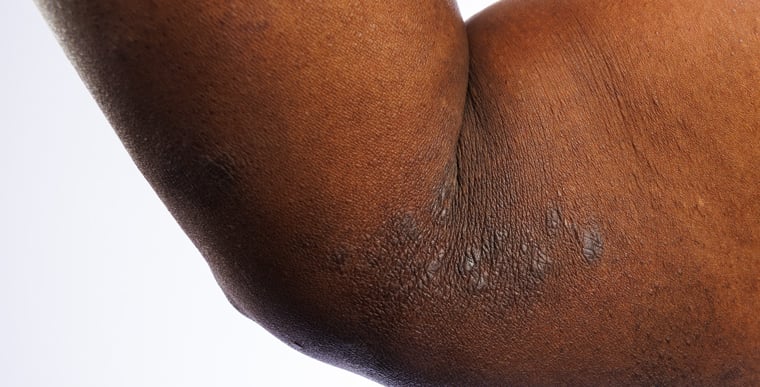
Patches of eczema on arm

Navigate a New Diagnosis

You just found out you have eczema. It’s time to learn the basics so you can effectively manage your skin and overall health.

On this page

  • Key Facts
  • 6 Things You Should Do After Receiving an Eczema Diagnosis
  • Tips to Manage the Itch of Eczema

Back to top

up arrow

If you’ve recently been diagnosed with eczema, you might be overwhelmed trying to figure out what this skin condition is and how to manage it in your daily life. The National Eczema Association (NEA) is here to help you every step of the way. We’re committed to being both an informational resource and a source of community and support for you and your loved ones.

To get started, here are some basic facts about eczema to help you get your bearings, plus some key tips to help you get your care plan set up and going


Key Facts

  • Eczema is common – In the United States, around 31.6 million people (roughly 10% of the population) have some form of eczema.1-3 It is more common in children.
  • Eczema is the name for a group of inflammatory skin conditions that cause itchiness, dry skin, rashes, scaly patches, blisters and skin infections.
  • There are seven types of eczema, each with its own set of symptoms. They are: atopic dermatitis, contact dermatitis, dyshidrotic eczema, neurodermatitis, nummular eczema, seborrheic dermatitis and stasis dermatitis.
  • Atopic dermatitis is the most common type of eczema.
  • Eczema is an umbrella term often used interchangeably to describe various types of eczema. Oftentimes, people call atopic dermatitis just eczema, however atopic dermatitis is a type of eczema.
  • The exact cause of eczema is unknown. Some factors may include a weakened skin barrier (the outer protective layer of skin), an overactive immune system that leads to inflammation, environmental triggers or genetics.
  • Eczema is not contagious. You can’t “catch” it or spread it to others.
  • Eczema is a chronic disease that can last your entire life.
  • Eczema can come on at any age. Eczema in babies often appears in the first few months of life. And people in their 60s and 70s can also get eczema for the first time.
  • Eczema can lead to other health issues like depression, anxiety, sleep disruption and more. It’s important to care for your health overall including your mental health.
  • There is no cure for eczema. There are many ways to treat and manage eczema.

6 Things You Should Do After Receiving an Eczema Diagnosis

1. Assemble your medical dream team

Find healthcare professionals who have a deep knowledge of treating eczema specifically. Try to find providers who make you feel comfortable and who listen to your symptoms.

Shared decision making between patients and providers have been linked to better outcomes for patients. This means you’re able to have a conversation with your provider, a shared dialogue in which you’re able to communicate your own lived experience with the condition and talk through the best treatment options for you.

Many medical support teams include your: primary care provider (pediatrician for kids), dermatologist, allergist and other medical health professional(s).

If you need help finding a dermatologist with expertise in eczema, use the Eczema Provider Finder on the National Eczema Association’s website.

2. Do your research

Educate yourself. Learn about your specific type — or types — of eczema. The causes, symptoms and treatments for each type of eczema vary. Learn the common causes so you can understand what’s happening in your body, and how it may present on your skin. Eczema symptoms can present differently depending on your skin tone. The National Eczema Association’s website has a lot of informational content to help you dive deep, as well as updates on new research that affects eczema treatment.

3. Identify your triggers

For many people new to eczema, the search begins immediately to identify your triggers. These are the factors in your body and environment that spur your eczema into a state of agitation (commonly referred to as a flare or flare-up).

For some people, identifying triggers is easy; for others, the process of identifying what causes your skin to flare can take more time, even years of trial and error. The hardest part is that it’s different for everyone — no two cases of eczema are alike.

4. Moisturize often

No matter what your triggers are it is important to moisturize, moisturize, moisturize. Eczema wreaks havoc on your body when your skin becomes excessively dried out. To combat this, each individual with eczema typically develops their own daily skincare routine to moisturize as often and as much as their skin needs.

If you need help finding moisturizers that are deemed suitable for people with eczema or sensitive skin, check out the National Eczema Association’s Seal of Acceptance™ Product Directory.

5. Try to be patient

Trying to figure out how to manage your eczema — or your child’s eczema — is a marathon, not a sprint. The chronic nature of the disease may include many years of symptom-free life, followed by unexpected weeks of flaring skin. Caring for loved ones with eczema can be challenging because it can feel like it’s all consuming. This is normal. And there is support for you and your loved ones.

6. Find support and community

The National Eczema Association is here for you. We have an entire community of people with eczema and their caregivers ready to share their insights and experiences. Learn about treatment options, get tips from healthcare providers and find personal stories from others living with eczema at NationalEczema.org. Plus, find us on social media at @NationalEczema.


Tips to Manage the Itch of Eczema

“Don’t scratch” doesn’t work with eczema. Dr. Jennifer LeBovidge, a psychologist at the Atopic Dermatitis Center and the Food Allergy Program at Boston Children’s Hospital and a member of the Harvard Medical School faculty, talks about ways to manage the itch-scratch cycle of eczema.

References
  1. Shaw TE, Currie GP, Koudelka CW, Simpson EL. Eczema prevalence in the United States: data from the 2003 National Survey of Children’s Health. J Invest Dermatol. 2011;131(1):67-73.
  2. Hanifin JM, Reed ML, Eczema Prevalence and Impact Working Group. A population-based survey of eczema prevalence in the United States. Dermatitis. 2007;18(2):82-91.
  3. Abuabara K, Magyari A, McCulloch CE, Linos E, Margolis DJ, Langan SM. Prevalence of Atopic Eczema Among Patients Seen in Primary Care: Data From The Health Improvement Network. Ann Intern Med. 2019;170(5):354-356.

 
Medically reviewed on May 6, 2025.

Related Stories

image

Webinar

Watch: You’re Newly Diagnosed With Eczema — Now What?
image

Articles

5 Terms Your Dermatologist Uses You Might Not Understand
image

Articles

6 Essential Products for Eczema and Why They Work
image

Articles

Itching for Relief: Eczema’s Number One Symptom Explored
image

Webinar

Watch: You’re Newly Diagnosed With Eczema — Now What?
image

Articles

5 Terms Your Dermatologist Uses You Might Not Understand
image

Articles

6 Essential Products for Eczema and Why They Work
image

Articles

Itching for Relief: Eczema’s Number One Symptom Explored
image

Webinar

Watch: You’re Newly Diagnosed With Eczema — Now What?
image

Articles

5 Terms Your Dermatologist Uses You Might Not Understand
image

Articles

6 Essential Products for Eczema and Why They Work
image

Articles

Itching for Relief: Eczema’s Number One Symptom Explored

Toggle drawer

Get the latest in eczema news, delivered.

Sign up for NEA's e-newsletter to receive evidence-based articles, expert-sourced lifestyle tips and stories from your community.

Nea footer logo
  • About NEA
  • Press Room
  • Contact Us
  • Careers
  • Seal of Acceptance Application
  • Partnership Opportunities
  • Privacy Policy
  • Terms and Conditions
facebookXyoutubesocial iconthreadslinked-in

The National Eczema Association (NEA) improves the health and quality of life for people affected by eczema, and empowers those who advocate, support and deliver care.

Our Accreditations

National Health Council standards of excellence certification programGuide Star Seal of TransparencyBetter Business Bureau accredited charityGlobal Skin internation alliance of dermatology patient organizationsaccreditation logo

NEA is a qualified 501(c)(3) EIN 93-0988840.

© National Eczema Association, All rights reserved 2026