Find Eczema-Friendly ProductsFind a Doctor
Logo
search
menu
About Eczema
Research
News & Stories
Get Involved
About Us
Donate
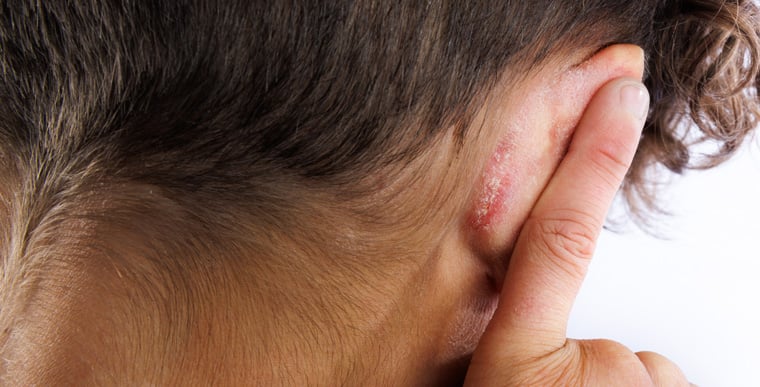
Dry patches of ear eczema on back of ear

Ear Eczema

Eczema can affect any part of the body, including the ears. Ear eczema causes irritation, flaking and sometimes visible, uncomfortable rashes.

On this page

  • Overview
  • Symptoms
  • Ear Eczema Images
  • Causes and Triggers
  • Diagnosis
  • Treatment
  • Management
  • Prognosis
  • Frequently Asked Questions

Back to top

up arrow

Overview

Ear eczema primarily affects the outer ear and ear canal, causing dryness, itchiness, redness or scaling. Unlike eczema in other areas, the ear has a mix of dry and oily skin, which can influence how symptoms appear and how the condition is treated. The outer ear may appear flaky, while the ear canal can become irritated from oils, sweat or reactions to soaps, shampoos or other products.

The most common types of ear eczema include:

  • Contact Dermatitis: Irritant contact dermatitis occurs when the skin is damaged by substances such as hair products, soaps, earrings or headphones, without involving an allergen. Allergic contact dermatitis, more common in the ears, happens when the skin reacts to specific allergens.
  • Atopic Dermatitis: This chronic immune-related condition is caused by environmental or genetic factors and an overactive immune response that triggers inflammation. The skin barrier becomes weak, leaving skin dry, itchy and prone to flare-ups. Some people have a filaggrin gene mutation that increases susceptibility.
  • Seborrheic Dermatitis: This type commonly affects oil-rich areas including the ear canal and surrounding skin. Causes greasy yellowish scales, redness and flaking. Triggers may include hair products, environmental factors, stress, cold weather, hormonal changes and reactions to Malassezia yeast.
  • Asteatotic Eczema: Also called xerotic eczema, this form primarily affects older adults whose skin has lost moisture over time. It is most common in cold or dry climates and can be aggravated by frequent washing or harsh soaps.

Symptoms

Symptoms vary depending on the type of eczema and the location on or around the ear.

Common symptoms of ear eczema include:

  • Dry, flaking or peeling skin on or behind the ears
  • Patchy or greasy scales, white or yellow in seborrheic dermatitis
  • Rashes that can appear red, brown or purplish depending on skin tone
  • Itching, burning or stinging sensations
  • Swelling or puffiness of the ear
  • Cracked or thickened skin with chronic inflammation
  • Small blisters, crusting or fissures in severe cases
  • Temporary discharge or weeping from inflamed areas

Flare-ups can mimic ear infections, so consult a doctor if pain, swelling or discharge occurs.


Ear Eczema Images

View full ear eczema image gallery
Gallery image
Gallery image
Gallery image

Causes and Triggers

Many factors can trigger ear eczema, often depending on the type of eczema causing the flare. The skin in and around the ear is thin and sensitive, making it vulnerable to irritation and allergic reactions.

Common ear eczema triggers may include:

  • Metals in earrings and glasses or frames, preservatives or chemicals in hair products and cosmetics, which can cause allergic reactions
  • Harsh soaps, cleansers, shampoos, conditioners or styling products that irritate the skin
  • Hair products such as shampoos, conditioners, hair dyes and styling products that can transfer to the ears during washing or through hair contact
  • An overactive immune response, common in atopic eczema, that weakens the skin barrier and increases susceptibility to inflammation
  • Environmental factors like cold weather, dry air, low humidity or wind, which can dry out the skin
  • Friction from headphones, earbuds, hats or helmets
  • Moisture buildup from swimming, sweating or insufficient drying, which can aggravate the ear canal and surrounding skin
  • Stress, which can increase inflammation and trigger flare-ups

By identifying and avoiding your triggers, you can take targeted steps to protect the skin in and around the ears.


Diagnosis

Ear eczema is often diagnosed by a dermatologist through physical examination and patient history. Because symptoms can resemble ear infections or other skin conditions, accurate diagnosis is important.

 Additional diagnostic tools may include:

  • Patch Testing: Identifies allergens causing eczema, including metals, hair products and cosmetics
  • Skin Biopsy: Confirms diagnosis if the cause is unclear

Early and accurate diagnosis helps distinguish between atopic eczema, seborrheic dermatitis, contact dermatitis and infections, allowing for targeted treatment. Tracking symptoms and triggers can support more effective care.


Treatment

Because ear skin is sensitive, treatments must be gentle. The first step is avoiding known triggers such as irritating hair products, earrings or soaps.

Common ear eczema treatment options include:

  • Avoid Triggers: Stop using products that irritate the ears, including hair products and earrings. Patch testing can identify allergens, and hypoallergenic alternatives may be recommended.
  • Non-Steroidal Topicals: Calcineurin inhibitors or PDE4 inhibitors reduce inflammation without the risks of steroid use.
  • Topical Corticosteroids (Low-Potency Only): Reduce inflammation on the outer ear. High-potency steroids should be avoided near the ear canal due to skin thinning risks.
  • Steroid Ear Drops: Reduce inflammation in the ear canal under dermatologist supervision.
  • Emollient-Rich Moisturizers: Hydrate dry skin, particularly in asteatotic eczema. Choose products with high oil content.
  • Cold Compresses or Wet Wrap Therapy: Use to soothe irritation during flare-ups.

Following a dermatologist-approved plan and maintaining consistent care between flares can improve symptoms and quality of life.


Management

Long-term management is key to preventing recurrences and minimizing flare severity.

Tips for managing ear eczema include:

  • Use Gentle Products: Choose fragrance-free, hypoallergenic shampoos, conditioners and soaps. Look for products with the NEA Seal of Acceptance to reduce irritation.
  • Be Careful with Hair Products: Shampoos, conditioners and dyes can run over the ears during washing and cause allergic reactions. Tilt your head when rinsing and avoid products containing fragrances or harsh preservatives.
  • Rinse Thoroughly: Make sure all shampoo and conditioner are rinsed away from the ears and hairline to prevent buildup or residue that can irritate skin.
  • Moisturize the Outer Ear: Apply a gentle, fragrance-free moisturizer or emollient to the outer ear and behind the ears once or twice daily. Avoid inserting products into the ear canal unless directed by your doctor.
  • Differentiate Care by Type: Seborrheic dermatitis may require antifungal treatments, while atopic eczema benefits from moisturization and barrier repair. Follow your dermatologist’s treatment plan closely.
  • Avoid Scratching: Scratching increases irritation and infection risk. Apply a cold compress or use an anti-itch treatment recommended by your doctor instead.
  • Select Hypoallergenic Jewelry: Nickel allergies are a frequent cause of ear eczema. Choose earrings made of surgical steel, titanium, platinum or 18-carat gold and clean them regularly.
  • Limit Friction and Moisture: Clean headphones, hearing aids and helmets regularly to reduce bacteria and friction. After bathing or swimming, gently pat ears dry — never insert cotton swabs or objects into the ear canal.
  • Protect from Weather Changes: In cold or dry conditions, wear a hat or earmuffs and consider using a humidifier indoors to keep skin from drying out.
  • Manage Stress: Stress can worsen eczema symptoms. Practice relaxation techniques or mindfulness to help reduce flare frequency.
  • Monitor for Infection: If you notice pain, swelling, yellow discharge or symptoms that don’t improve, contact your doctor promptly.

Consistent care and early attention to new irritation can help prevent severe flare-ups and maintain healthy ear skin.


Prognosis

While ear eczema has no cure, proper care and avoidance of triggers usually allow for long periods without symptoms. Allergic reactions are often controlled by identifying allergens, while atopic eczema may require ongoing management with gentle products. Early diagnosis, consistent management and protecting the skin barrier greatly improve long-term outcomes.


Frequently Asked Questions

What causes ear eczema?
Allergic reactions to earrings, hair products, metals or cosmetics, irritants like soaps, environmental factors, stress or overactive immune responses in atopic eczema.

Can hair products cause ear eczema?
Yes. Shampoos, conditioners, styling products and hair dyes, especially those with p-phenylenediamine, can trigger ear eczema even if the scalp is unaffected.

Can earrings cause ear eczema?
Yes. Nickel and other metals are common allergens causing contact dermatitis. Use hypoallergenic options.

How is ear eczema treated?
Avoid triggers and use doctor-recommended treatments such as low-potency steroid creams, steroid ear drops, non-steroidal topicals and emollient-rich moisturizers.

When should I see a dermatologist?
If symptoms persist, worsen, interfere with daily life or there are signs of infection. Seek immediate care for discharge, severe pain, swelling or crusting.

References
  1. Specht S, Persaud Y. Asteatotic Eczema. [Updated 2023 Jul 4]. In: StatPearls [Internet]. Treasure Island (FL): StatPearls Publishing; 2025 Jan-. Available from: https://www.ncbi.nlm.nih.gov/books/NBK549807/
  2. Militello M, Hu S, Laughter M, Dunnick CA. American Contact Dermatitis Society Allergens of the Year 2000 to 2020. Dermatol Clin. 2020;38(3):309-320.
  3. Brites GS, Ferreira I, Sebastiao AI, et al. Allergic contact dermatitis: From pathophysiology to development of new preventive strategies. Pharmacol Res. 2020;162:105282.
  4. Tucker D, Masood S. Seborrheic Dermatitis. [Updated 2024 Mar 1]. In: StatPearls [Internet]. Treasure Island (FL): StatPearls Publishing; 2025 Jan-. Available from: https://www.ncbi.nlm.nih.gov/books/NBK551707/

Continue Your Eczema Learning Journey

Stethoscope icon
Find an Eczema Doctor

Find a U.S. healthcare provider near you with experience treating eczema and related conditions.

Lotion bottle with checkmark icon
Browse Eczema-Friendly Products

Explore our database of products that have undergone our Seal of Acceptance review.

Paper newsletter icon
Read Stories from Real People

Visit our blog to read stories from your community members and get helpful tips for eczema management.

Lab Beaker Icon
Learn About Eczema Research

Get the latest on eczema research and find out how you can get involved with studies.

Toggle drawer

Get the latest in eczema news, delivered.

Sign up for NEA's e-newsletter to receive evidence-based articles, expert-sourced lifestyle tips and stories from your community.

Nea footer logo
  • About NEA
  • Press Room
  • Contact Us
  • Careers
  • Seal of Acceptance Application
  • Partnership Opportunities
  • Privacy Policy
  • Terms and Conditions
facebookXyoutubesocial iconthreadslinked-in

The National Eczema Association (NEA) improves the health and quality of life for people affected by eczema, and empowers those who advocate, support and deliver care.

Our Accreditations

National Health Council standards of excellence certification programGuide Star Seal of TransparencyBetter Business Bureau accredited charityGlobal Skin internation alliance of dermatology patient organizationsaccreditation logo

NEA is a qualified 501(c)(3) EIN 93-0988840.

© National Eczema Association, All rights reserved 2026