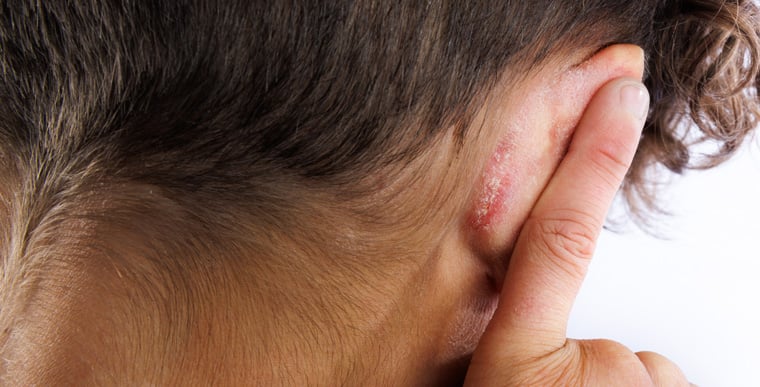

Ear eczema primarily affects the outer ear and ear canal, causing dryness, itchiness, redness or scaling. Unlike eczema in other areas, the ear has a mix of dry and oily skin, which can influence how symptoms appear and how the condition is treated. The outer ear may appear flaky, while the ear canal can become irritated from oils, sweat or reactions to soaps, shampoos or other products.
The most common types of ear eczema include:
- Contact Dermatitis: Irritant contact dermatitis occurs when the skin is damaged by substances such as hair products, soaps, earrings or headphones, without involving an allergen. Allergic contact dermatitis, more common in the ears, happens when the skin reacts to specific allergens.
- Atopic Dermatitis: This chronic immune-related condition is caused by environmental or genetic factors and an overactive immune response that triggers inflammation. The skin barrier becomes weak, leaving skin dry, itchy and prone to flare-ups. Some people have a filaggrin gene mutation that increases susceptibility.
- Seborrheic Dermatitis: This type commonly affects oil-rich areas including the ear canal and surrounding skin. Causes greasy yellowish scales, redness and flaking. Triggers may include hair products, environmental factors, stress, cold weather, hormonal changes and reactions to Malassezia yeast.
- Asteatotic Eczema: Also called xerotic eczema, this form primarily affects older adults whose skin has lost moisture over time. It is most common in cold or dry climates and can be aggravated by frequent washing or harsh soaps.


