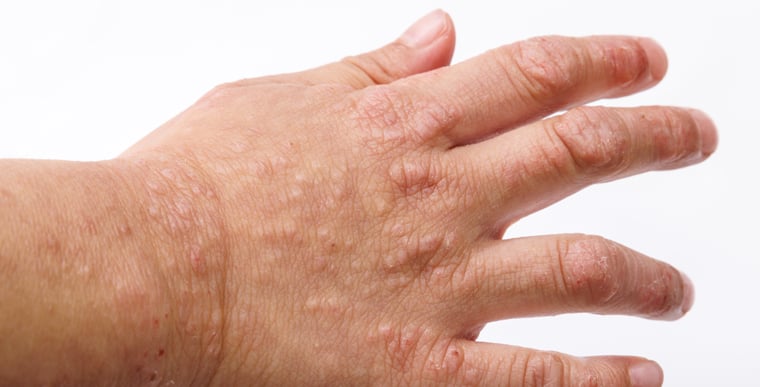
Hand eczema (also called hand dermatitis) is a common form of eczema that affects the hands and wrists, causing dryness, itching, rashes, blisters and sometimes painful cracks or infections that can make daily activities difficult. About 14.5% of people worldwide experience hand eczema, including roughly 10% of teens aged 16–19 and 1–4% of school-aged children.
While there is no cure, and not all hand eczema is the same, identifying your specific type of hand eczema is essential for effective treatment and management. Hand eczema may occur alongside other atopic conditions such as asthma or hay fever, which share similar immune sensitivities.
The most common causes of hand eczema include:
- Irritant Contact Dermatitis: Caused by frequent exposure to irritants like soaps, detergents or chemicals. It often affects people in jobs such as hairstyling, healthcare and mechanics. When work-related, it’s called occupational hand eczema.
- Allergic Contact Dermatitis: Triggered by allergens such as rubber gloves, fragrances or preservatives. Diagnosing and avoiding the allergen is key to control.
- Atopic Hand Eczema: Related to atopic dermatitis elsewhere on the body. It’s influenced by genetics, immune response and environment. Individuals with a filaggrin gene mutation may have a weaker skin barrier, which can increase their risk of flares.
- Dyshidrotic Eczema: Also known as acute recurrent vesicular eczema, it appears as small, itchy blisters filled with clear fluid. It commonly affects people in “wet work” professions, such as hairdressers, food service workers and healthcare professionals.
- Hyperkeratotic Eczema: Characterized by thick, cracked skin on the palms (and sometimes soles). This form can be difficult to treat and may require prescription medication.
- Neurodermatitis: Appears as isolated, itchy patches — often on the hands or elbows. This painful form of eczema is more common in adults with other types of eczema and may be triggered by dry skin, insect bites or rough fabrics.


