Find Eczema-Friendly ProductsFind a Doctor
Logo
search
menu
About Eczema
Research
News & Stories
Get Involved
About Us
Donate
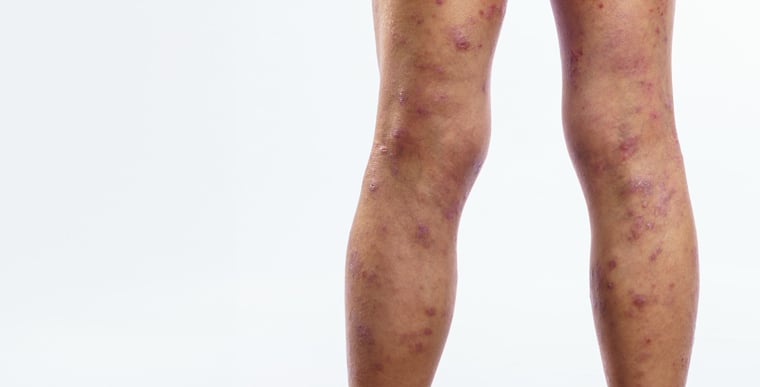
Patches of red inflamed leg eczema

Leg Eczema

Leg eczema can show up in different ways. It can look like coin-shaped patches on your shins, swelling around your ankles or dry, scaly skin behind your knees.

On this page

  • Overview
  • Symptoms
  • Leg Eczema Images
  • Causes and Triggers
  • Diagnosis
  • Treatment
  • Management
  • Prognosis
  • Frequently Asked Questions

Back to top

up arrow

Overview

Your legs face unique challenges when it comes to eczema. They rub against clothing all day, deal with hot and cold temperatures and — especially as you get older — can develop circulation problems that make eczema harder to heal. Different types of eczema affect the legs, and each has its own causes and best treatments.

While there is no cure for eczema, knowing which type you have helps you better treat it. About 15% of contact dermatitis cases happen on the legs. Stasis dermatitis (the circulation-related kind) affects 6-7% of adults over 50. If you have atopic dermatitis, you probably remember it showing up behind your knees as a kid, though adults usually get it on their shins and the fronts of their legs instead.

The most common types of leg eczema include:

  • Atopic Dermatitis: This is the most common type of eczema on the legs. If you have a filaggrin gene mutation, your skin barrier doesn’t work as well as it should, which makes your leg skin more easily irritated.
  • Contact Dermatitis: This happens when your legs react to something that touches them — like fragrances in body lotion, preservatives in sunscreen, dyes in your jeans, the nickel button on your pants or chemicals in your laundry detergent. The rash usually shows up right where the irritant touched your skin.
  • Nummular Eczema: You’ll recognize this one by its coin-shaped patches, usually on your lower legs and shins. These round spots (anywhere from 1-10 cm across) can itch like crazy and sometimes ooze or crust over. This type is more common in men and usually starts in middle age or later.
  • Neurodermatitis: This causes one or two super-itchy, thick patches on your shins, ankles or calves. You scratch it, which makes it worse, so you scratch more — it’s a frustrating cycle. It usually requires treatment to clear up and often occurs in people who already have atopic dermatitis or contact dermatitis.
  • Stasis Dermatitis: Also called venous eczema, this develops on your lower legs when you have poor circulation and fluid builds up. It’s most common in people over 50. If you don’t treat it, it can turn into open sores called venous ulcers. The risk goes up to 20% for adults over 70.

Nummular eczema and neurodermatitis often pop up after you hurt your skin, during stressful times or if you already have another type of eczema.


Symptoms

Paying attention to where and how your leg eczema shows up can help you figure out which type you have. The pattern of your symptoms is actually a big clue.

Common symptoms of leg eczema include:

  • Intense itching that may interfere with sleep
  • Dry, flaking or scaly skin
  • Red or inflamed patches (appearing pink to red in lighter skin tones, brown to purple in darker skin tones)
  • Burning or stinging sensations
  • Circular coin-shaped patches on shins (in nummular eczema)
  • Thickened, leathery skin from chronic scratching
  • Brown discoloration and “cayenne pepper spots” on lower legs (in stasis dermatitis)
  • Ankle swelling and heaviness after standing (in stasis dermatitis)
  • Oozing, crusting or weeping lesions during active flares
  • Cracked, painful fissures that may bleed
  • One or two intensely itchy patches (in neurodermatitis)
  • Open sores or ulcers on the lower legs (advanced stasis dermatitis)

Leg Eczema Images

View full leg eczema image gallery
Gallery image
Gallery image
Gallery image

Causes and Triggers

Leg eczema can occur due to a mix of things — your genes, how your immune system works and what your legs come into contact with every day. Finding out what triggers your flares is the key to having fewer of them.

Common leg eczema triggers include:

  • Fabrics like wool, synthetic materials or rough textures that rub against leg skin throughout the day and damage the skin barrier
  • Topical products, including fragranced body lotions, shaving creams, hair removal products, self-tanners and sunscreens, applied to legs
  • Harsh soaps and detergents that remain in clothing after washing and contact leg skin all day
  • Environmental factors such as dry winter air that removes moisture from exposed leg skin, hot showers that strip natural oils or chlorine from swimming pools
  • Prolonged standing or sitting that worsens circulation and increases swelling in the lower legs (particularly relevant for stasis dermatitis)
  • Stress and anxiety that can trigger or worsen flares, especially with atopic dermatitis and neurodermatitis
  • Physical trauma, including insect bites, scrapes, cuts or skin injuries on the legs that trigger nummular eczema or neurodermatitis
  • Temperature extremes, such as cold weather exposure on bare legs or excessive heat that causes sweating
  • Allergens, including nickel in jean rivets or buckles, leather tanning chemicals, rubber components in elastic bands or preservatives in topical products
  • Enclosed footwear extending to the calves that can trap moisture and irritants against the lower leg skin

Diagnosis

Your dermatologist can usually tell what type of leg eczema you have just by looking at your rash — where it is, what pattern it makes and how it looks. Depending on what they think is going on, they might do some additional tests.

Additional diagnostic tools may include:

  • Patch Testing: Identifies specific allergens causing allergic contact dermatitis, including fragrances, preservatives, metals or other substances that contacted the legs
  • Venous Studies: For suspected stasis dermatitis, Doppler ultrasound or other tests assess blood flow and identify circulation problems in leg veins
  • Skin Biopsy: Used when diagnosis is uncertain or to rule out other conditions like psoriasis. Shows spongiotic changes characteristic of eczema

Getting the right diagnosis from the start means you can use the right treatment. Consider tracking your symptoms, what might have triggered them and when flares happen — all helpful info for your dermatologist.


Treatment

Treating leg eczema well means figuring out which type you have and dealing with both the symptoms you’re feeling right now and what’s causing them in the first place. If you have stasis dermatitis (the circulation kind), fixing your circulation problems is just as important as calming down the skin inflammation.

Common leg eczema treatment options include:

  • Topical Corticosteroids: First-line treatment for reducing inflammation and itching. Mild steroids like hydrocortisone for sensitive areas, medium-potency options for general leg skin and stronger formulations for thickened patches. Applied to affected areas as directed, typically once or twice daily during flares.
  • Non-Steroidal Alternatives: Used for long-term management or when steroid side effects are a concern. Particularly useful for sensitive areas like behind the knees.
  • Emollients and Barrier Repair: Thick, fragrance-free creams or ointments (particularly those containing ceramides or petroleum jelly) applied liberally at least twice daily and immediately after bathing. The legs’ larger surface area means generous amounts are needed for adequate coverage.
  • Wet Wrap Therapy: For severe leg eczema flares, wrap legs in damp bandages or gauze after applying medication and moisturizer, then cover with dry layers. This intensive treatment helps medication penetrate while reducing itching overnight.
  • Compression Therapy: Essential for stasis dermatitis. Medical-grade compression stockings (20-30 mmHg or higher) help pump blood back toward the heart and reduce swelling. Worn daily and removed at night.
  • Occlusive Treatments: Zinc oxide paste bandages (Unna boots) may be prescribed for severe stasis dermatitis or when venous ulcers are present.
  • Antihistamines: Oral antihistamines reduce nighttime itching, though they don’t address underlying inflammation.
  • Phototherapy: Targeted UV light treatment for widespread leg eczema that hasn’t responded to topical treatments.
  • Systemic Medications: For moderate to severe cases, oral corticosteroids for severe flares, immunosuppressants like methotrexate or cyclosporine, or newer biologics like dupilumab that target specific immune pathways.

Working with your dermatologist to create a comprehensive treatment plan really improves your long-term results. If you have stasis dermatitis, you might need procedures to fix the vein problems that are causing it — things like treating varicose veins or valve issues.


Management

Keeping leg eczema under control long-term means building good daily habits and avoiding things that trigger you. Since your legs have a lot of surface area, you’ll need to use plenty of moisturizer. What you wear on your legs matters a lot too.

Tips for managing leg eczema include:

  • Choose Appropriate Clothing: Wear soft, breathable fabrics like 100% cotton for pants and avoid wool or rough synthetics that irritate leg skin. Wash new clothes before wearing to remove formaldehyde and other chemicals. Use fragrance-free, dye-free laundry detergents and skip fabric softeners.
  • Moisturize Generously: Apply thick, petroleum-based ointments or emollient-rich creams immediately after bathing while skin is still damp, covering the entire leg area generously. During flares, increase application to three or four times daily. Learn about NEA Seal of Acceptance products.
  • Practice Gentle Bathing: Use gentle, fragrance-free cleansers and avoid hot showers that dry out leg skin. Pat (don’t rub) dry and apply moisturizer immediately while skin is still slightly damp. Learn more about bathing and moisturizing.
  • Manage Stasis Dermatitis: Wear compression stockings as prescribed and avoid prolonged standing or sitting. Regular walking helps improve circulation and elevate legs regularly throughout the day.
  • Control the Itch-Scratch Cycle: Keep nails short and smooth, wear soft pants or long underwear to bed and apply cold compresses to itchy areas. Breaking this cycle is essential, especially for neurodermatitis.
  • Identify and Avoid Allergens: If contact dermatitis is suspected, consider patch testing to identify substances in lotions, sunscreens, clothing or laundry products triggering reactions.
  • Use Safe Sun Protection: Choose fragrance-free sunscreens with physical blockers (zinc oxide or titanium dioxide) for exposed leg skin during outdoor activities.
  • Practice Stress Management: Mindfulness, meditation or therapy can help reduce flare frequency, particularly with atopic dermatitis and neurodermatitis. Learn more about emotional wellness and eczema.
  • Monitor for Infection: Watch for signs of bacterial infection, including yellow-golden crusting, increased pain, warmth, red streaks or pus. Seek prompt medical attention if infection develops. Learn about eczema and infections.

When you stick with these habits every day, your flares won’t be as intense, and you’ll have longer stretches of clear skin.


Prognosis

Your outlook depends on which type you have. Contact dermatitis clears within two to three weeks once you avoid triggers, while atopic dermatitis is chronic but often improves with age. Nummular eczema patches can persist for months and recur in the same spots. Stasis dermatitis requires ongoing circulation management to prevent venous ulcers, while neurodermatitis resolves once you break the itch-scratch cycle. Regular moisturizing, stress management and addressing circulation issues lead to fewer flares and better quality of life.


Frequently Asked Questions

Which products or ingredients should I look for?
Thick, petroleum-based ointments and creams with ceramides work best for leg eczema. Look for fragrance-free, hypoallergenic moisturizers with colloidal oatmeal for itch relief. For exposed leg skin during outdoor activities, choose physical sunscreens containing zinc oxide or titanium dioxide. Browse NEA Seal of Acceptance products.

Which products should I avoid?
Avoid fragranced body lotions, scented shaving creams, hair removal products with irritating chemicals and self-tanners with allergens. Steer clear of harsh soaps, fabric softeners and laundry detergents with dyes or fragrances. Be cautious with wool clothing and rough synthetic fabrics.

When should I see a doctor?
See a dermatologist if leg eczema persists beyond 2-3 weeks, causes severe pain or sleep disruption, shows signs of infection, affects your ability to walk or participate in daily activities, or if you notice increasing ankle swelling or skin discoloration that could indicate stasis dermatitis.

Can I exercise with leg eczema?
Yes, but choose activities that minimize sweating and friction against leg skin. Swimming is often well-tolerated. Wear soft, breathable cotton pants or shorts during exercise. Apply moisturizer before and after activity. Shower promptly after exercising to remove sweat and chlorine.

Does shaving make leg eczema worse?
Shaving can irritate eczema-prone leg skin. Use fragrance-free shaving cream or gel, shave in the direction of hair growth and apply moisturizer immediately after. Consider alternative hair removal methods or shaving less frequently during flares.

Why does my leg eczema get worse in winter?
Dry winter air removes moisture from leg skin, cold temperatures reduce circulation (worsening stasis dermatitis) and indoor heating further dries the air. Increase moisturizer application frequency and consider using a humidifier indoors.

What’s the difference between leg eczema and psoriasis?
Both cause red, scaly patches, but psoriasis typically creates thicker, more defined silvery scales and often affects elbows and knees. A dermatologist can distinguish between them through examination and possibly a skin biopsy.

References
  1. Boguniewicz M, Fonacier L, Guttman-Yassky E, et al. Atopic dermatitis yardstick: Practical recommendations for an evolving therapeutic landscape. Ann Allergy Asthma Immunol. 2018;120(1):10-22.
  2. Militello M, Hu S, Laughter M, Dunnick CA. American Contact Dermatitis Society Allergens of the Year 2000 to 2020. Dermatol Clin. 2020;38(3):309-320.
  3. Azeem M, Kader H, Kerstan A, et al. Intricate Relationship Between Adaptive and Innate Immune System in Allergic Contact Dermatitis. Yale J Biol Med. 2020;93(5):699-709.
  4. Ratliff AF, Garza-Mayers AC, Kroshinsky D. Nummular eczema: clinical characteristics and associated factors. J Am Acad Dermatol. 2019;81(3):804-810.
  5. Robertson L, Evans C, Fowkes FG. Epidemiology of chronic venous disease. Phlebology. 2008;23(3):103-111.
  6. Chi CC, Wang SH, Mayon-White R, Wojnarowska F. Incidence of chronic leg ulceration and lower limb amputation in patients with venous leg ulcers in England: a retrospective cohort study. Int J Low Extrem Wounds. 2009;8(2):47-51.
  7. Katsarou A, Armenaka M. Atopic dermatitis in older patients: particular points. J Eur Acad Dermatol Venereol. 2011;25(1):12-18.

Continue Your Eczema Learning Journey

Stethoscope icon
Find an Eczema Doctor

Find a U.S. healthcare provider near you with experience treating eczema and related conditions.

Lotion bottle with checkmark icon
Browse Eczema-Friendly Products

Explore our database of products that have undergone our Seal of Acceptance review.

Paper newsletter icon
Read Stories from Real People

Visit our blog to read stories from your community members and get helpful tips for eczema management.

Lab Beaker Icon
Learn About Eczema Research

Get the latest on eczema research and find out how you can get involved with studies.

Toggle drawer

Get the latest in eczema news, delivered.

Sign up for NEA's e-newsletter to receive evidence-based articles, expert-sourced lifestyle tips and stories from your community.

Nea footer logo
  • About NEA
  • Press Room
  • Contact Us
  • Careers
  • Seal of Acceptance Application
  • Partnership Opportunities
  • Privacy Policy
  • Terms and Conditions
facebookXyoutubesocial iconthreadslinked-in

The National Eczema Association (NEA) improves the health and quality of life for people affected by eczema, and empowers those who advocate, support and deliver care.

Our Accreditations

National Health Council standards of excellence certification programGuide Star Seal of TransparencyBetter Business Bureau accredited charityGlobal Skin internation alliance of dermatology patient organizationsaccreditation logo

NEA is a qualified 501(c)(3) EIN 93-0988840.

© National Eczema Association, All rights reserved 2026